How to choose a chainsaw
Choose a STIHL chainsaw to suit the job: guide bar length, hobby or a stronger class, petrol or cordless.
How to choose a chainsaw
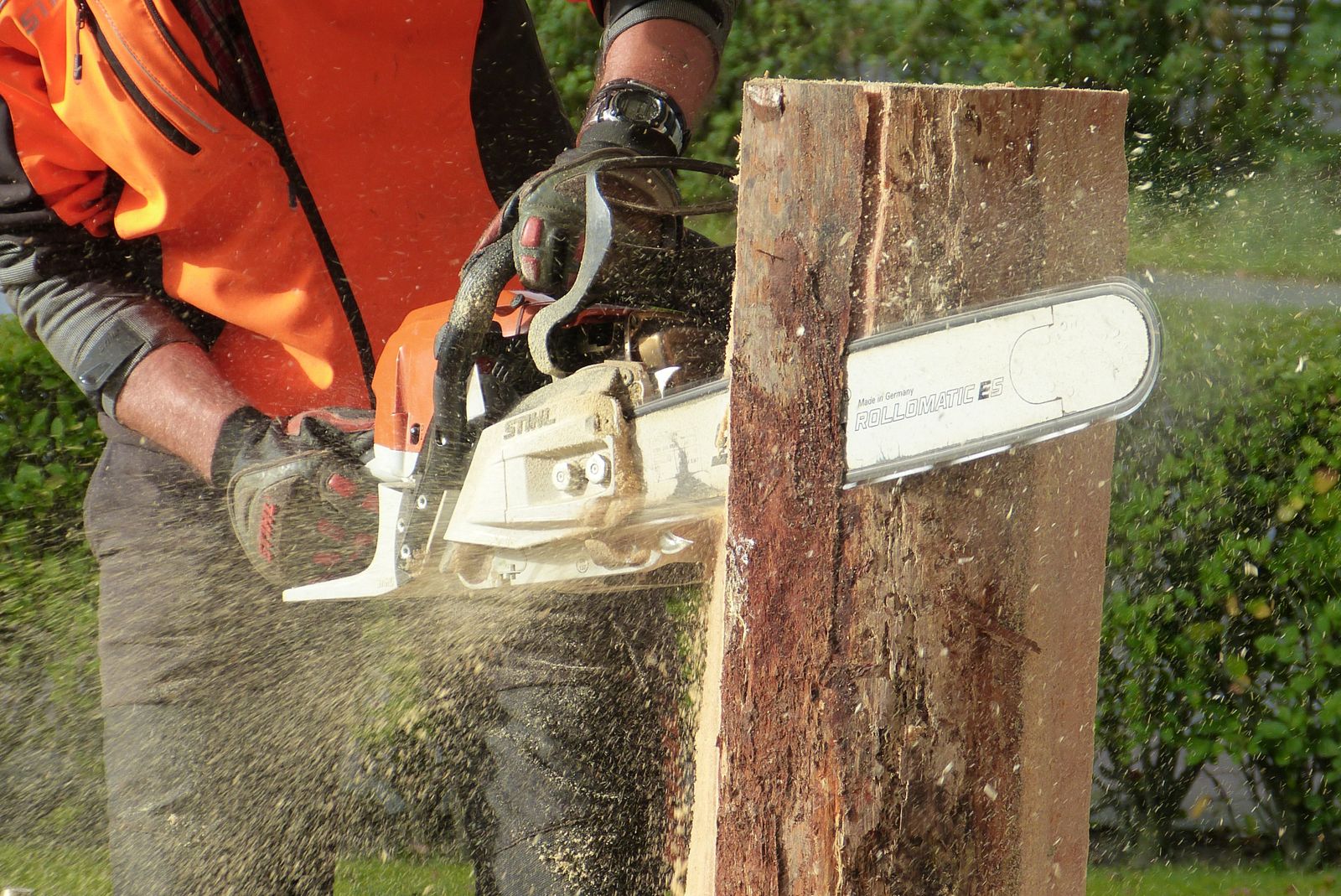
Choose a chainsaw according to what you’ll be cutting: a shorter guide bar and a STIHL hobby-class saw are enough for firewood at home and smaller trunks, a longer guide bar and a more powerful petrol model suit thicker trunks and long jobs, and a cordless STIHL chainsaw is best for quick jobs around the house with less noise. The guide bar length should match the diameter of the wood with some margin, not follow ‘the longer, the better’. A sharp chain and proper guide bar maintenance matter as much for safety and performance as the engine itself. At Zakservices in Senica, we sell and service STIHL chainsaws and will help you choose to suit your work and our stock.
What you’ll learn in this article
- which guide bar length to choose
- petrol or cordless STIHL
- hobby or heavier work
- chain, guide bar and maintenance (with a pointer to sharpening)
- safety when sawing
- FAQ and how to contact Zakservices in Senica
Guide bar length: the first filter
The bar (guide bar) determines what diameter of wood you can cut through comfortably. A practical rule: the effective cutting length of the guide bar should be at least slightly greater than the diameter of the trunks you’ll cut most often. A guide bar that’s too long for a small saw makes it harder to handle. One that’s too short forces you into dangerous positions and extra cuts.
Guide table
| Typical work | Approximate guide bar length | Note |
|---|---|---|
| Branches, smaller firewood, around the house | roughly 30 to 35 cm | easy handling, hobby and cordless |
| Ordinary firewood, medium-sized trunks | roughly 35 to 40 cm | the most common compromise for the home |
| Thicker trunks, longer seasonal work | roughly 40 to 45 cm and more | needs adequate engine power |
Always check the exact range for the specific STIHL model and in the manual. The guide bar and chain must match (pitch, number of drive links, groove width).
What else to watch on the guide bar
- the condition of the groove and the nose (wear shortens the life of the chain)
- correct chain tension (too slack and it jumps off, too tight and it overheats)
- lubricating the guide bar with chain oil (check the level before every job)
- turning the guide bar over as the manual says, so that it wears more evenly
A blunt chain on a good guide bar cuts badly. So does a sharp chain on a worn guide bar. Keep both parts in good condition together.
Petrol or cordless STIHL
Similar logic applies to chainsaws as to lawnmowers and brushcutters. You’ll find a more detailed general comparison of petrol and cordless in a separate article in this series. Here’s a summary for chainsaws.
STIHL cordless chainsaw
Choose cordless when:
- you do shorter jobs around the house, at a cottage with a charger or in the workshop
- you want quieter starting and fewer fumes while you work
- you already have STIHL batteries in the AK or AP system
- you need quick, ‘precise’ cuts without a long warm-up or mixing fuel
A STIHL cordless chainsaw is excellent for everyday work at home. If you spend whole days preparing large volumes of firewood, allow for several batteries or consider petrol.
STIHL petrol chainsaw
Choose petrol when:
- you saw for longer and far from a power supply
- you work with thicker trunks
- you need endurance without breaks for charging
- you process a larger volume of wood each season
Petrol requires the right fuel and two-stroke oil for the mix as the manual says, filter cleaning and spark plug care, and it’s noisier. Reserve power and long working sessions are its strengths.
| Criterion | Cordless STIHL | Petrol STIHL |
|---|---|---|
| Typical work | shorter, around the house | longer, out in the field |
| Noise | lower | higher |
| Run time | depends on the batteries | depends on the fuel |
| Maintenance | batteries, chain, guide bar | engine + chain + guide bar |
| Suited to | hobby use and convenience | hobby use and heavier seasonal work |
Hobby or heavier work
The class of machine should match how often and how hard you work, not an ambition to ‘have the most powerful one’. We’ve also covered the difference between hobby and more demanding use in our article on hobby versus professional machinery.
Hobby and the typical household
- occasional cutting of firewood
- tree maintenance in the garden (within safe reach from the ground, without the risk of working at height without qualifications and equipment)
- a shorter guide bar, lower weight, easier handling
Heavier and frequent work
- regular processing of larger volumes of wood
- thicker trunks and longer days in the season
- a more powerful engine, a more robust guide bar, better anti-vibration and more durable components
Buying a chainsaw that’s ‘too big’ for a beginner often leads to fatigue and less safe work. Buying one that’s ‘too small’ for thick trunks leads to forcing the cut, overheating and disappointment. A middle way based on the wood you actually cut is the most sensible.
As a rough market guide (not the Zakservices price list), hobby chainsaws start in the low hundreds of euros and go up depending on the guide bar and specification. More powerful and specialised set-ups cost more. We’ll confirm stock and price in Senica.
Chain and guide bar: maintenance makes the saw
Even the best STIHL chainsaw cuts badly with a blunt chain. Basic care:
- Sharpen the chain in good time. Signs of bluntness are fine dust instead of chips, having to push into the cut and a crooked cut.
- Check the depth gauges after sharpening. If the depth gauge is too high, the chain cuts weakly. If it’s too low, the chain becomes aggressive and dangerous.
- Tension the chain as the manual says. The slack changes as the chain warms up, so check it during work too.
- Top up the chain oil and check that the guide bar is being lubricated (a trace of oil when you test it).
- Clean sawdust out of the guide bar groove and the oil holes.
- When replacing the chain, use the correct pitch and length for the guide bar.
You’ll find a detailed guide to sharpening, angles and depth gauges in our article How to sharpen a chainsaw chain correctly. At Zakservices, we’ll help you choose files and a file guide, and assess whether to keep sharpening or replace the chain or guide bar.
Before and after the season, also take care of routine engine preservation and storage conditions, following our tips on spring preparation and autumn winterising.
Safety when working with a chainsaw
A chainsaw is one of the most dangerous garden machines. The firm tone here isn’t exaggeration. This is the minimum for safety.
- Head, eye and ear protection, cut-resistant gloves, sturdy footwear and suitable trousers.
- Before starting, check the chain brake, tension, lubrication and surroundings (a stable stance, an escape route).
- Hold the saw with both hands. Never reach across a running chain.
- Watch out for kickback from the upper quarter of the guide bar tip. Cut with the correct part of the guide bar and keep the saw steady.
- Don’t cut above shoulder height, and don’t stand in the line where a trunk or branch could fall.
- On a STIHL cordless saw, remove the battery before checking or changing the chain. On a petrol saw, switch off the engine and secure it against accidental starting as the manual says.
- Don’t work when you’re tired, on unstable ground or under the influence of alcohol.
If you’re a beginner, start with shorter cuts on firmly supported wood. Leave large trees and risky felling situations to experienced people.
How to choose, step by step
- Write down the most common diameter of the wood and how often you saw.
- Choose the guide bar length with a reasonable margin.
- Decide on cordless or petrol based on run time and where you work.
- Check the availability of chains, oil and servicing.
- Take protective equipment as seriously as the saw itself.
- Plan for sharpening and lubrication, not just the first cut.
What to get ready besides the saw
A good STIHL chainsaw without the right kit around it will only slow you down:
- protective equipment (eyes, hearing, gloves, sturdy footwear)
- chain oil and, depending on the type, two-stroke oil for the fuel mix
- a round file, a file guide and a flat file for the depth gauges
- a spare chain of the correct pitch
- a stable base for sawing (a sawhorse, a stand)
If you use the STIHL cordless system, check the battery capacity and whether the charger can keep up with your working rhythm. With petrol, allow for a fuel can, a funnel and clean fuel storage.
Common mistakes when choosing and using a chainsaw
- A guide bar that’s too long for a light hobby engine. The saw is hard to control and the cut is unsteady.
- Forcing the cut with a blunt chain. You wear out the guide bar, the engine and yourself.
- Working without the chain brake and without checking the tension.
- Skimping on guide bar lubrication. A dry guide bar overheats and wears extremely quickly.
- Underestimating kickback. Even experienced operators stick to the rules. Beginners all the more so.
If you’re torn between two guide bar lengths, the one that usually wins in the shop is the one that suits the wood you cut most often, not the single thickest trunk of the season. For an exceptionally thick piece, there’s always another method or another machine.
Frequently asked questions (FAQ)
1. What guide bar length for ordinary firewood?
A range of roughly 35 to 40 cm is usually right, depending on the diameter of the logs and the model. We’ll fine-tune it to your wood in the shop.
2. Is a STIHL cordless chainsaw enough for a winter’s worth of firewood?
For a small to medium volume, yes, with spare batteries. For large volumes and thick trunks, petrol is often the safer bet.
3. How does a hobby chainsaw differ from a stronger class?
In weight, endurance during long jobs, anti-vibration and reserve power. A hobby saw is enough for occasional cutting. Frequent heavier work calls for a more robust machine.
4. How often should I sharpen the chain?
As soon as the cutting gets worse, ideally after working in sand or after contact with the ground. Frequent light touch-ups are better than one heavy regrind.
5. Why does the saw cut crooked?
Often the left and right cutters are unevenly sharp, the guide bar is worn or the tension is wrong. Check both the chain and the guide bar.
6. Which oil should I use for the chain?
Use an oil designed for lubricating the guide bar and chain, as the manufacturer recommends. Ordinary engine oil is no substitute.
7. Can I change the guide bar length on the same saw?
Only within the range the manufacturer approves for that model, and with the correct chain. Not every longer guide bar suits every engine.
8. How much does a typical hobby chainsaw cost?
On the market, often from the low hundreds of euros upwards, depending on the guide bar and specification. This is a guide, not the Zakservices price list. We’ll confirm stock in person.
Servicing and service life
The life of a STIHL chainsaw isn’t just about engine hours. It depends on whether you:
- sharpen sooner rather than later
- lubricate the guide bar every time you work
- clean the filter and the cooling system
- store the machine somewhere dry
- replace the chain and guide bar before they damage other parts
At Zakservices, we can assess wear on the guide bar and sprocket as well as the saw’s overall condition. Sometimes a new chain is enough. Sometimes the groove in the guide bar is already ‘eaten away’, and replacing it prevents further damage.
Let us help you at Zakservices in Senica
Come in with a description of your wood (diameter, how often you cut, whether you already have STIHL batteries). At Zakservices in Senica, we’ll show you suitable STIHL chainsaws, guide bars, chains and sharpening tools, depending on current stock. We’ll also help with servicing when a chain or guide bar has reached the end of its life.
Zakservices, s.r.o.
Obchodná 493/2A, 905 01 Senica (white building opposite the Kaufland car park)
Phone: 0904 446 915, 034/651 7072
Email: zakservices@zakservices.sk
Website: https://zakservices.sk
We’ll check specific models and availability with you in person.