How to choose a hedge trimmer
Choose a STIHL hedge trimmer by power source, blade length and branch thickness. Find out when cordless is enough and when petrol is the safer bet.
How to choose a hedge trimmer
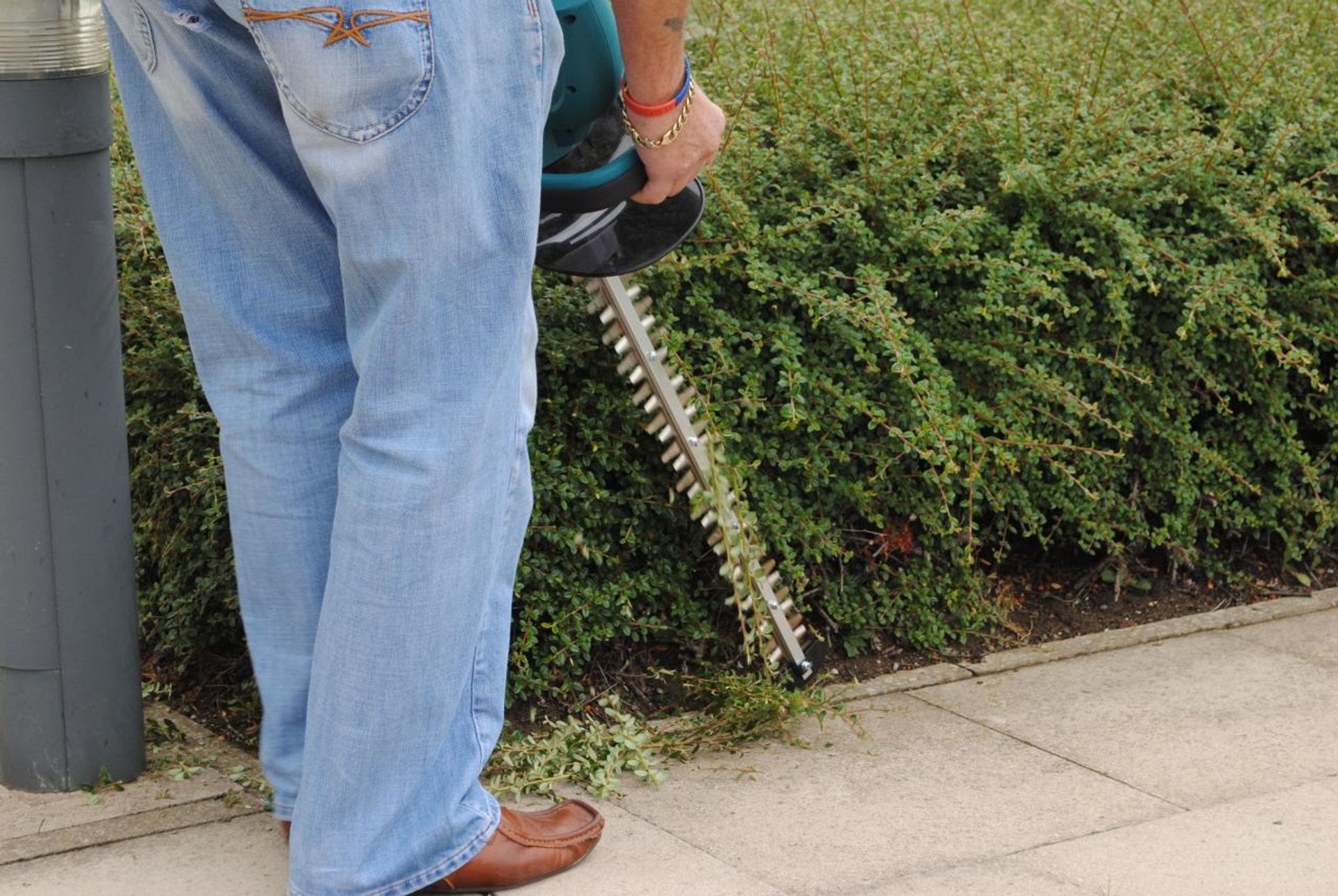
Choose a hedge trimmer by looking at three things together: the power source (cordless or petrol STIHL), the blade length and the thickness of the branches in your hedge. For a regularly trimmed garden hedge with green shoots, a cordless STIHL with a blade of roughly 45 to 60 cm is enough. For long, dense and woodier hedges or all-day work, a petrol STIHL is the safer bet. Wider tooth spacing copes with thicker branches. At Zakservices in Senica, we’ll fine-tune the choice to your actual hedge and our current stock.
What you’ll learn in this article
- cordless or petrol STIHL
- blade length to suit the size of the hedge
- hedge thickness and tooth spacing
- tall hedges and long-reach machines
- a practical way to choose
- maintenance and safety in brief
- FAQ and how to contact Zakservices in Senica
Cordless or petrol STIHL
The power source determines comfort, run time and how thick a growth you can handle without breaks. With STIHL, this often means the AK (home garden) and AP (more demanding use) battery systems, or the HS petrol range.
When to choose cordless STIHL
- a small or medium-sized hedge by the house
- regular light or medium trimming of green shoots
- work close to the neighbours, where you’ll appreciate quiet operation without fumes
- you already have STIHL AK or AP batteries and want to share the system with a lawnmower, brushcutter or leaf blower
- short or medium-length working sessions within one season
STIHL cordless hedge trimmers (such as the HSA range) are easy to use every day. The run time depends on the battery capacity. For a longer hedge, allow for a second battery. The AK and AP systems are not interchangeable, so choose the system with an eye to your other tools.
When to choose petrol STIHL
- a long or dense hedge and work without frequent charging
- thicker, woodier branches and a more neglected hedge
- a plot far from a charger
- harder seasonal cutting, where you need reserve power
- home use and more demanding use alike, where engine endurance is what counts
STIHL petrol hedge trimmers (the HS range, such as the HS 45) keep going for a long time as long as you top up the fuel. They need the correct fuel mix as the manual says and care of the filter and spark plug, and they make more noise. During long work, you’ll appreciate anti-vibration and good balance more than ‘the biggest engine in the catalogue’.
| Criterion | Cordless STIHL | Petrol STIHL |
|---|---|---|
| Starting and everyday comfort | very good | good once you’re used to it |
| Run time without a break | depends on the batteries | long, as long as there’s fuel |
| Noise and fumes | low noise, no fumes while working | more noise, exhaust fumes |
| Thicker, woody hedge | good with more powerful set-ups | typically the safer bet |
| Maintenance | batteries, blade, cleaning | fuel, filter, spark plug, blade |
| Typical situation | house, neighbours, regular trimming | long sessions, dense or neglected hedge |
The petrol versus cordless logic is the same as with other garden machinery. You’ll find it in more detail in our separate comparison of petrol and cordless machines.
Blade length: how many centimetres you need
Blade length (cutting length) determines how much you take in one sweep and how easily you can guide the machine. It isn’t a contest for the longest blade. A long blade without the power and control to match is tiring and makes for crooked lines.
Rough bands
- A short blade up to about 45 cm. Better control for shaping, smaller shrubs, details and cramped spots. Also suitable for finer touch-ups.
- A medium blade of roughly 45 to 60 cm. The most common choice for a typical garden hedge. A good compromise between area covered and ease of handling. In practice, many cordless and petrol STIHL models with a blade of around 50 or 60 cm fall into this band.
- A long blade over about 60 cm. Faster progress along long, straight hedge faces. It needs a more powerful machine, experience and a stable stance. For a beginner, it can be harder to keep level.
Matching the blade to the hedge
- a low, short ornamental hedge: a shorter or medium blade
- a straight hedge along the street or the boundary: a medium or longer blade
- a tall hedge that you work on from the ground: as well as blade length, think about reach (STIHL HLA long-reach hedge trimmers on a pole)
- an intricate shape with curves: preferably a shorter or medium blade for better control
A practical rule: choose the blade for the longest straight face you trim often, not for the exceptional ‘tallest shrub in the corner’.
Hedge thickness and tooth spacing
The thickness of the branches decides whether the hedge trimmer cuts cleanly or keeps jamming. With STIHL, look at the tooth spacing (the gap between the teeth on the blade). Wider spacing copes with thicker branches. Narrow spacing is gentler on young green shoots.
A guide by thickness
- Fine green shoots (roughly 8 to 10 mm): a lighter STIHL cordless model with narrow or medium tooth spacing is enough. Ideal for regular maintenance.
- A typical garden hedge (roughly 10 to 25 mm with regular trimming): medium tooth spacing of 20 to 30 mm and a medium blade. A typical situation for the HSA and for HS petrol models in home use.
- Thicker, woodier branches (roughly 30 mm and more, depending on the model): wider tooth spacing (often over 30 mm) and a more powerful machine, often a STIHL petrol model. Cut back branches that are too thick with loppers or a pruning saw first, as a hedge trimmer is no substitute for a saw.
| Type of hedge | Approximate branch thickness | Blade | Power source |
|---|---|---|---|
| Fine ornamental, regular trimming | thin green shoots | shorter or medium | cordless STIHL |
| Typical garden hedge | medium thickness with regular trimming | 45 to 60 cm | cordless or petrol STIHL |
| Dense, long, more neglected | thicker woody branches | medium or longer | preferably petrol STIHL |
| Tall hedge from the ground | depending on density | medium + long reach | cordless STIHL HLA or a suitable petrol model |
Trim your hedge regularly. A thick, neglected hedge isn’t solved by ‘buying the most powerful machine’. It’s a question of timing. A powerful hedge trimmer helps, but cutting back gradually and removing the thickest branches with another tool is safer.
Tall hedges and long reach
If you trim the top of a tall hedge from a stepladder, the risk of falling grows faster than the benefit of a long blade. For taller hedges, consider a STIHL cordless long-reach hedge trimmer (the HLA range, such as the HLA 56 in the AK system). A reach of around 2 m from the ground and an adjustable blade angle let you do the top and the sides without unnecessary climbing.
Long reach is no substitute for a powerful petrol hedge trimmer on thick, woody growth. It’s a safer way of keeping the height and line of a tall hedge in routine maintenance.
Choosing in practice: a short procedure
- Estimate the length and height of the hedge and whether it’s regularly kept or neglected.
- Look at the thickness of the branches you’ll cut most often.
- Choose cordless or petrol based on quietness, run time and distance from a charger.
- Pick the blade length (usually 45 to 60 cm for a garden hedge).
- Check the tooth spacing against the thickness.
- For a tall hedge, add or choose long reach instead of a stepladder.
- Check stock, batteries, charger and servicing in the shop.
We’ve also covered the difference between home use and more demanding use in our article on hobby versus professional garden machinery. The same applies to hedge trimmers: buy for the job, not for the biggest number on the label.
Maintenance and safety (in brief)
A hedge trimmer has a sharp blade that runs at a high stroke rate. A blunt or dirty blade tears instead of cutting cleanly and puts more load on the engine and the battery.
- Before you start, check the surroundings: stones, wires, hoses, people and animals.
- Wear eye protection, sturdy footwear and, depending on the noise, ear protection.
- Hold the machine with both hands and keep a stable stance. For a tall hedge, prefer long reach to a stepladder.
- After work, clean sap and debris off the blade. Fit the blade guard before storage.
- On a STIHL cordless model, remove the battery before cleaning. Store the batteries as the manual says (more in our article on winter storage of STIHL batteries).
- On a petrol model, stick to the correct fuel mix, keep the filter clean and have it serviced regularly.
- Have a blunt blade professionally sharpened or checked in the workshop. Sharpening at home without a jig and experience can easily ruin the geometry of the teeth.
Safety isn’t an afterthought at the end of the manual. It’s what lets the machine serve you for a long time without injury.
Common mistakes when choosing
- A blade that’s too long for a small, intricate hedge. Less control and crooked lines.
- An underpowered cordless set-up for a dense, neglected hedge, with no spare battery capacity.
- Ignoring the tooth spacing. A narrow gap on thick branches means constant jamming.
- A stepladder instead of long reach for a tall hedge.
- Buying without servicing and parts. The blade, the batteries and routine maintenance decide how long the machine lasts.
Frequently asked questions (FAQ)
1. Is a STIHL cordless model enough for my garden hedge?
Yes, if you trim the hedge regularly and the branches aren’t thick and woody. For a longer hedge, have a second battery ready or choose a more powerful set-up.
2. When is a STIHL petrol hedge trimmer better?
When you need long run times without charging, or have dense growth or thicker branches. You’ll also appreciate petrol on a plot far from a power supply.
3. Which blade length is the most versatile?
For most garden hedges, the range of roughly 45 to 60 cm. A shorter blade gives control. A longer one speeds up straight faces.
4. What does tooth spacing mean?
It’s the gap between the teeth on the blade. Wider spacing handles thicker branches better. Narrow spacing is gentler on young shoots.
5. Can I use a hedge trimmer on thick branches like a saw?
No. For very thick woody growth, use suitable loppers or a pruning saw first. A hedge trimmer is for maintenance and shaping, not for heavy removal of stems.
6. How can I trim a tall hedge more safely?
From the ground with a STIHL HLA long-reach hedge trimmer, a stable stance and the blade angle adjusted. Use a stepladder only when it’s truly unavoidable and you’re sure it’s stable.
7. Is it worth sharing AK or AP batteries with other tools?
Yes. If you already have a STIHL lawnmower, brushcutter or leaf blower in the same system, a hedge trimmer that uses it saves on batteries and chargers. Don’t mix AK and AP, though.
8. What budget should I allow?
On the market, cordless and petrol set-ups for home use start in the low hundreds of euros and go up depending on the blade, the battery and the specification. This is a market guide, not the Zakservices price list. We’ll confirm the specific model and stock in the shop.
Let us help you at Zakservices in Senica
Come in with a short description of your hedge (length, height, branch thickness, whether you already have STIHL batteries). At Zakservices in Senica, we’ll show you suitable STIHL hedge trimmers and accessories and, if needed, related garden machinery from stock (including SUPA TECHNIKA, STIGA, WOLF-Garten, Cub Cadet and DAKR in other categories).
Zakservices, s.r.o.
Obchodná 493/2A, 905 01 Senica (white building opposite the Kaufland car park)
Phone: +421 904 446 915, +421 34 651 70 72
Email: zakservices@zakservices.sk
Website: https://www.zakservices.sk
We’ll check specific models and availability with you in person.